
We All Buy From Everywhere. Here's Why Cottage Gear Still Matters.
By Ben McMillen, Owner, Hilltop Packs
Think about your friend who paints.
Maybe she sells small pieces at a local market. Maybe she gave you something for your birthday once. The frame isn't quite straight, there's a smudge in one corner, and the painting itself has a few flaws you would never admit to your friend you noticed. By any technical measure, you can buy a "better" painting at Target for less money.
But you don't.
That piece your friend made hangs in your living room. The mass-produced one would have been hanging in a thrift store within a few years.
Humans value effort. We always have. We always will. And that instinct doesn't go away just because Amazon makes everything two-day shipping.
This is a piece about why cottage gear still matters. Not because the big brands are evil. Not because USA-made is automatically better quality. Not because you should feel guilty about anything you've ever bought. It's about a feeling I think most of us already know, even when we forget to honor it.
I Buy From Amazon Too. So Do You. That's Fine.
Let's get this out of the way first.
It's easy to hit the buy button on Amazon knowing it'll be there in a few days. Small brands can't match that. Pretending otherwise is foolish.
Everything in your kitchen, your garage, in your dresser, came from somewhere. Some of it from people you'll never know on the other side of the world. Some of it comes from factories that ship millions of units a year. That's how the modern world works. It's not going away. I'm not arguing against any of that.
I want to be clear about that, because the "buy American, buy small" pitch usually arrives with a side of guilt. Like you owe somebody an apology for the fact that you bought a cheap 12 pack of socks from Costco. You don't. Both things can be true and are perfectly acceptable. You can stock your house with mass-produced stuff AND find a handful of cottage brands you genuinely love. Those aren't in conflict with each other, nor should they be.
I run a small backpacking gear shop in Waynesburg, Pennsylvania. We hand-sew ultralight food bags, dry bags, stuff sacks, and backpacks. I also buy stuff on Amazon. There's no contradiction. There's just a difference in what each thing means to me and the value it brings.
What Cottage Brands Actually Look Like
Here's what I think a lot of people miss about "cottage gear."
When you buy from a small brand, the texture of the thing you bought is different.
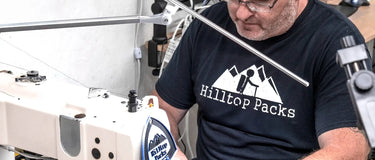
The bag was probably designed by a person you might have seen in a YouTube video, talking through why they built it the way they did. It was cut and sewn by hand by a real person, whose photo is probably on the company's Instagram. The package that arrived at your door was probably folded and taped by the same person who answers customer service emails. You might know their name. You might write to them. They might write back.
That's a lot of words to describe what a small brand actually is. But that's the experience. The bag isn't just a bag. It came from somewhere specific, made by somebody specific, with a story you can actually trace.
This is what big national brands cannot fake, no matter how much marketing budget they pour into trying to look like a small relatable brand. You don't know who made your fancy highly advertised jacket. You can't email a large corporate CEO. You'd never expect to. That's the actual difference. It's not about quality. It's about scale, and scale changes what something is, even if the object itself looks similar and functions the same.
Why Effort Hits Different
I think this is why we still go to concerts even though we can stream the same songs at home for free.
We could buy the album. The audio quality might be higher. We'd save time. But we don't. We pay more for the live show because there's a person up there making the effort right in front of us. The performance, the sweat, the live mistakes. That's what we paid for. Not just the music itself. The effort.
Same reason we tip the chef who comes out of the kitchen. Same reason hand-knit gifts feel different than the same scarf at an expensive department store. Same reason a thank-you card written by hand outperforms a printed one every single time.
We are wired for this. It's not a marketing trick. It's not a virtue you have to develop. It's already in you.
Cottage gear is the same instinct, applied to the stuff you carry on your back into the woods.
Humans value effort.
When Something Breaks
Here's one of the more practical reasons I personally support cottage brands and small makers.
When I buy something from a large brand and have a problem, I know I'm probably going to just throw it away or never use it. The warranty exists on paper. In practice, it's a phone call on hold or an online request form built to outlast your patience. The friction isn't a bug. It's the business model. They've engineered the process to be slightly more painful than the item is worth, betting most of us will quit halfway through. The big brands know this. The math works for them.
When I have a problem with something I bought from a small brand, I usually send a quick email. Most of the time the issue resolves within a day or two, often with a personal note from somebody who's actually invested in the company and actively trying to do the right thing.
I've been disappointed by small brands too. Of course. Some of them are great, some of them aren't. But the percentage of issues I've had resolved with a single email from a small brand is much higher than my experience with national or global brands. With small brands, the warranty isn't a legal document. It's a relationship.
That's because the goal at most cottage brands is your satisfaction, not the maximum profit they can squeeze by refusing or limiting your claim. Different incentive structure. Different result for you.
This Is Not About Pity
I want to be very specific about this.
I'm not trying to convince anyone to buy crap. I'm not asking anyone to buy something they don't need out of pity for small American brands. That's the wrong vibe entirely. I don't want sympathy purchases. Nobody at any cottage brand does.
What I'm asking is something different. I'm asking you to find brands you actually align with. Brands whose work you genuinely want to support. Brands that make stuff you need, things that you'd proudly recommend to your friends without prompting.
That's the whole pitch. Find the cottage brands that fit you. The ones whose values match yours, whose products serve your actual life, whose owners or employees you'd happily grab coffee with if you ever happened to be in their town.
Some of those will be USA-based. Some will be in other countries. Some will be making outdoor gear. Some will be making coffee, paintings, knives, skincare, or shoes. The category doesn't matter. The alignment does.
YOU are Part of OUR Story
Here's the part most cottage brand owners don't say out loud. Because it’s not easy to explain without sounding gimmicky.
When you buy from a small maker, you're not closing a transaction. You're showing up in the next version of their work.
Your order tells us what people are actually carrying. Your warranty email tells us what's breaking and where. Your feedback after six months on trail tells us what's working and what isn't. We bake all of that back into the next iteration. The brand BUILDS with you. Big brands sell TO you.
The customer at a national brand is a revenue line. The customer at a cottage brand is a collaborator. Your name shows up in the conversations we have on the shop floor. Your story shapes what we make next.
You are part of our story. That's not marketing copy. That's literally how it works.
What I'm Asking
I want to encourage you to find brands you love that are hand-crafted right here in the USA. I also want to be clear that I'm not shaming you for also buying mass-produced gear from other countries.
Both things can be true and are perfectly acceptable to any reasonable person.
This doesn't have to be an all-or-nothing thing. You can buy your hiking shorts at Walmart and buy your dry bags from a tiny shop in Pennsylvania. You can have an Amazon Prime account and still get excited every time you place an order with a small maker whose work you've come to trust and enjoy for the story behind it.
What I'd ask is just this: at least once in a while, when you're shopping for something you're going to actually use and care about, look around for the cottage version. Not because you have to. Because you might find a brand whose story makes the gear feel a little different on trail. Because the effort somebody put into that thing might add a layer to it that mass production can't replicate. Because finding a maker whose work you love is its own small reward.
That's it. No pressure. No guilt trips. No "support American manufacturing or it all dies and it's your fault." Just a quiet invitation to notice the makers and small businesses around you. They're working harder to keep that small USA maker spirit alive than you realize. Most of them love it and embrace the struggle as part of their story. And when you buy what they make, you become part of why they keep doing it.
Humans value effort. We always have. We always will. It’s up to you how we reward that effort.
Ben McMillen is the owner of Hilltop Packs in Waynesburg, Pennsylvania, where the team hand-sews ultralight backpacking food bags, dry bags and backpacks for thru-hikers and weekend warriors alike. You can find their work at hilltoppacks.com.


Thank you for the read.
As a supporter of cottage industries and a former business owner, I would like to share my main reasons for supporting them, along with the challenges I see facing the cottage industry.
I am fed up with the global progressive agenda. When I purchase products from a major supplier, a portion of my money may go toward funding some so-called righteous cause that happens to be trending. All too often, these causes result in reverse racism, gender bias, and cherry picking the flaws of Americans.
I look for cottage industries that are American-based, American-owned, and employ Americans. Men and women who take pride in their work and, at the end of the day, go home to care for their families and friends.
It is great to have global awareness and want to pass Cokes around on a mountaintop while singing for world peace. But at the end of the day, our American children, our American families, and our American way of life are paramount.
Knowing the story of the person who sewed my gear and being able to reach out and talk directly about the products—these are the personal connections I value.
Knowing that my fellow Americans receive my patronage before those in far-off lands is called loyalty.
Thank you, cottage industry.
Sincerely,
An American Veteran
Your story was excellent and also applies to my Lippencott Alpaca’s business! I focus on my yarns from my own herd but also value a few yarn vendors that I trust. We offer tours that let people “feel” the differences in the six grades of fiber and identify the advantages of processing with quality fiber. The more people learn about alpacas and their fiber, the more people appreciate quality.