
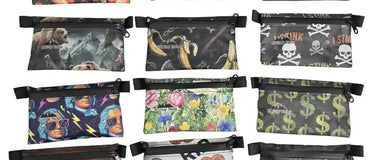
Ready to ditch the bulky leather brick? Our minimalist Dyneema wallet lineup is made in the USA and weighs about as much as a couple of coins.
When ultralight backpackers obsess over every gram, the wallet is usually one of the last things they think about. A standard bifold can run two to three ounces, about the same as a stove, or a couple of stakes, or that backup battery you debated bringing. For a community that drills holes in toothbrushes to save weight, that's a lot of dead weight in your pocket.
Enter the Dyneema wallet: an ultralight, waterproof, near-indestructible alternative built from the same fabric we use to make backpacks that survive 2,000-mile thru-hikes.
If you've been hearing more about Dyneema wallets lately and want to know whether they're worth it, this guide is for you.
What is a Dyneema wallet?
A Dyneema wallet is a minimalist wallet made from Dyneema Composite Fabric (DCF) — a non-woven laminate made by sandwiching ultra-high-molecular-weight polyethylene fibers between thin sheets of polyester. The result is a fabric that's:
- Waterproof (the fibers themselves don't absorb water)
- Extremely strong for its weight (stronger than steel by weight)
- Lightweight to a degree that no other wallet material can match
- Resistant to UV, mildew, and abrasion
Dyneema was originally developed for sailing and tactical gear, bulletproof vests, parachutes, racing sails. When ultralight backpackers discovered it about a decade ago, the gear world changed. Today it's used for shelters, backpacks, stuff sacks, food bags, pack liners, and yes, wallets.
Why ultralight backpackers care about wallet weight
There's a concept in ultralight backpacking called "the brutal honesty of an accurate scale." The idea is simple: if you weigh every single item in your pack, you start making rational decisions about what's worth carrying. Suddenly that three-ounce wallet feels like a small dumbbell.
A typical leather bifold weighs 2-3 oz (60-85g). A typical Dyneema wallet weighs 0.2-0.3 oz (6-12g). That's an 80-90% weight reduction for the same functional item.
It's not enough to change your base weight by itself, but it's part of a hundred small decisions that take an ultralight kit from 25 pounds to 12.
How much does an ultralight Dyneema wallet weigh?
Most Dyneema wallets weigh between 0.2 and 0.3 ounces depending on the fabric thickness, zipper type, and size. For reference:
- A folded dollar bill weighs about 1g (0.04 oz)
- A standard credit card weighs about 5g (0.18 oz)
- A typical Dyneema wallet weighs about 6-10g (0.21-0.35 oz)
So your wallet ends up weighing roughly the same as the cards inside it.
What to look for in a Dyneema wallet
Not all Dyneema wallets are created equal. Here's what actually matters:
1. Fabric weight. Dyneema comes in different weights, often labeled by ounces per square yard. Lighter fabric (D50t or similar) is lighter but slightly less abrasion-resistant. Heavier fabric (2.92 Dyneema) is more durable but weighs slightly more. For a wallet that lives in a pocket, it's the perfect compromise.
2. Zipper quality. A good Dyneema wallet uses a high quality zipper that won't snag or fail. Cheaper zippers will be the first thing to break.
3. Construction. Look for taped seams, Dyneema doesn't sew the same way regular fabric does. Quality builders use the right techniques.
4. Made in USA vs offshore. Most cottage-industry ultralight makers produce in the USA in small batches. You'll pay a bit more, but you're getting handmade quality and supporting small businesses.
5. Design. Some wallets are minimalist envelopes; others have card slots, ID windows, or compartments. Choose based on how much you actually carry. The lightest setup is just a zippered pouch with bills and 2-8 cards.
Pre-printed designs vs. plain Dyneema
A note on aesthetics: Dyneema is often used in printed patterns because the fabric is white by default and looks a bit clinical. Many ultralight makers offer patterned versions (topographic maps, camo, mountain prints) along with plain white or black options.
If you want something that disappears in your pocket and doesn't draw attention, plain white or plain black is the way to go. If you want your wallet to be a small piece of trail personality, patterns are fun.
Our take: the Hilltop Packs Ultralight Dyneema Wallet
We built our Ultralight Dyneema Wallet for the same reason we build everything else, because we decided to make a better one with fun printed patterns.
Here's what makes ours different:
- Made in our shop in the USA — by our team, not a factory overseas
- Weighs roughly a third of an ounce — about the weight of two credit cards
- Weather resistant zipper that won't fail on a long trail
- Available in plain white, plain black, or pre-printed patterns, you pick the personality
- Waterproof Dyneema construction that handles rain, sweat, creek crossings, and everything else trail throws at it
We use the same Dyneema fabric in our pack liners, bear bags, and zipper pouches, proven on thousands of miles of trail by hikers from the AT to the PCT.
FAQ: Dyneema wallets
Is a Dyneema wallet worth it? If you backpack, hike, or care about minimalist gear, yes. It's lighter, more durable, and more weather-resistant than any leather or nylon wallet at a similar price point. Even if you don't backpack, a Dyneema wallet just works, you'll keep using it for years.
How long does a Dyneema wallet last? With normal use, several years. Dyneema is one of the most durable fabrics commercially available. The most common failure point isn't the fabric, it's a low-quality zipper, which is why a high quality zipper matters.
Is Dyneema waterproof? The fabric itself is waterproof, water beads off and doesn't absorb. The zipper and seams aren't fully waterproof, so don't submerge it, but rain, sweat, and accidental dunks are no problem.
Can a Dyneema wallet hold cash and cards? Yes, most are sized for standard US bills and 4-8 cards. Some have card slots, others are simple envelopes.
Where can I buy a Dyneema wallet? You can buy ours right here. We make them in our shop and ship from the USA.
Ready to drop a few ounces?
Whether you're prepping for your first thru-hike or just tired of sitting on a chunky bifold, the Dyneema wallet is one of the easiest upgrades you'll ever make. Light, tough, weatherproof, and built by people who actually use this stuff on trail.


