
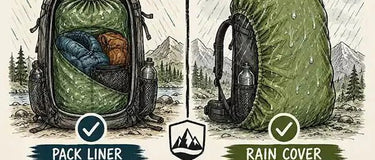
If you spend enough time backpacking, eventually you’ll get caught in rain that lasts all day. And that’s usually the moment hikers start asking: Should I use a pack liner or a pack cover?
The short answer?
- A pack liner usually protects your critical gear better.
- But there’s a little more to it than that.
What Is a Pack Liner?
 |
Ultralight Pack Liners by Hilltop Packs |
A pack liner is a waterproof bag that goes inside your backpack to protect your gear from rain and moisture.
Most hikers use them to keep:
- quilts
- sleeping bags
- clothing
- electronics
- dry layers
…safe from rain, river crossings, wet ground, and soaked backpack fabric.
At Hilltop Packs, our ultralight pack liners are designed for backpackers who want a lightweight and simple waterproofing system without adding unnecessary bulk.
What Is a Rain Cover?
A rain cover fits over the outside of your backpack like a shell.
The goal is simple:
keep rain from soaking the backpack fabric itself.
Rain covers can help reduce water absorption and keep the outside of your pack drier, but they have a few weaknesses:
- wind can blow rain underneath
- water can still enter through the back panel
- shoulder straps and hip belts still get soaked
- packs often get wet from your back sweat anyway
That’s why many experienced thru-hikers rely more heavily on pack liners.
Why Many Ultralight Backpackers Prefer Pack Liners
Ultralight backpackers love simple systems.
And honestly? Pack liners are hard to beat.
Benefits of Using an Ultralight Pack Liner
- Extremely lightweight
- Better protection for critical gear
- No flapping fabric in wind
- Works inside any backpack
- Protects gear even if pack fabric gets soaked
- Faster and simpler to use on trail
A wet backpack is annoying.
A wet quilt is dangerous.
That’s the real difference.
Pack Liner vs Rain Cover: The Biggest Difference
Here’s the easiest way to think about it:
Rain Cover
Protects the backpack itself but ONLY WHEN YOU USE IT
Pack Liner
Protects the important gear inside the backpack ALL THE TIME
That’s why many long-distance hikers consider a pack liner essential.
Can You Use Both?
Absolutely.
In fact, many backpackers do.
A common setup is:
- pack liner inside all the time
- rain cover outside as needed
This gives:
- better overall water resistance
- less water absorption
- drier exterior pockets
- added protection during extended storms
But if hikers only choose one?
Most experienced backpackers prioritize the pack liner.
What About Dry Bags?
Dry bags are another great option for organizing and waterproofing gear.
Many hikers use:
- a largeer pack liner for the main compartment
- smaller dry bags for electronics or clothing
- Even with a pack liner, some hikers use a ditty bag for their most water-sensitive items like electronics — belt-and-suspenders against a soaked battery pack.
This creates a layered waterproofing system without adding much weight.
When a Rain Cover Makes Sense
Rain covers still have advantages.
They can be useful for:
- keeping mesh pockets drier
- reducing mud buildup
- protecting external gear
- wet snow conditions
- travel or airport use
Some hikers simply prefer the added protection.
There’s no wrong setup if it works for your hiking style.
Choosing the Right Ultralight Pack Liner
A good ultralight pack liner should be:
- Highly weather resistant
- lightweight
- durable enough for repeated trail use
- easy to pack
- sized properly for your backpack
Most backpackers use pack liners to protect:
- quilts
- extra clothing
- sleeping gear
- electronics
The goal isn’t to keep the backpack dry.
The goal is to keep the important stuff dry.
Final Thoughts
If you’re trying to decide between a pack liner and a rain cover, the answer depends on what you’re trying to protect.
Rain covers help protect the outside of your backpack.
Pack liners protect the gear that actually matters.
And for most backpackers, especially ultralight hikers and thru-hikers, keeping your sleep system dry is the priority.
That’s why pack liners have become one of the simplest and most trusted waterproofing systems on trail.
Related Gear
Ultralight Pack Liners by Hilltop Packs


