
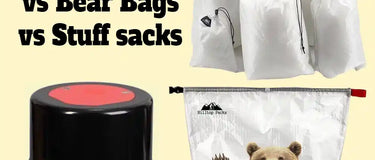
f you’re getting into backpacking, or trying to dial in your setup, you’ve probably asked:
Do I need a Beag Bag, dry bag, a bear canister, or just a stuff sack?
The short answer?
👉 They all serve completely different purposes.
And choosing the wrong one can mean:
- Wet gear
- Wasted space
- Or worse… a bear getting your food
Let’s break it down so you can build a smarter, lighter setup.
What Each One Is Actually For
Stuff Sacks → Organization + Compression
Stuff sacks are designed to:
- Organize your gear
- Compress soft items
- Maximize pack space
They’re best for:
- Quilts & sleeping bags
- Clothing
- Misc gear
👉 If you’re trying to go ultralight and efficient, stuff sacks are a core part of your system.
🌧️ Dry Bags → Waterproof Protection
Dry bags and Bear Bags are built to:
- Keep gear dry
- Protect critical items
They’re best for:
- Electronics
- Food (in wet conditions)
- Clothing you can’t afford to get wet
👉 If there’s a chance of rain, river crossings, or extended moisture… dry bags matter.
🐻 Bear Canisters → Bear Protection (Required in Some Areas)
Bear canisters are for one thing:
👉 Keeping bears (and other animals) out of your food
They are:
- Hard-sided
- Heavier and bulky
- Required in many locations (like parts of the PCT, Sierra, Adirondacks, etc.)
They’re not about waterproofing or compression—they’re about regulations and safety.
Hilltop Packs makes stock and Custom Printed Bear Bags/Food Bags
Side-by-Side Comparison
| Feature | Stuff Sack | Dry Bag | Bear Canister |
|---|---|---|---|
| Purpose | Organization | Waterproofing | Bear protection |
| Weight | Ultralight | Light | Heavy |
| Compression | Excellent | Limited | None |
| Waterproof | No | Yes | No |
| Required? | No | No | Sometimes |
So… Which Do You Actually Need?
👉 Most backpackers need:
- Bear Bags or Food Bags → For food storage with reinforced hanging tab
- Stuff sacks → for organization & compression
- Dry bags (selectively) → for critical items
👉 You ONLY need a bear canister if:
- You’re hiking in a required area
- You want or need maximum food protection at the cost of extra weight
Real-World Setup (What Most Hikers Do)
Here’s a simple, effective system:
- Quilt & clothes → Stuff sack
- Electronics & essentials → Dry bag
-
Food →
- Bear bag/food bag + hang system
- Bear canister (if required)
👉 This hybrid approach gives you:
- Efficiency
- Protection
- Flexibility
⚠️ Common Mistakes to Avoid
1. Skipping waterproof protection entirely
- One storm = soaked gear
2. Ignoring bear regulations
- Some areas require canisters (no exceptions)
Where Hilltop Packs Gear Fits In
If you’re building a smarter system:
👉 Use ultralight bear bags/food bags for:
- Saftely storing your food in most conditions
👉 Use ultralight stuff sacks for:
- Quilts
- Clothing
- Gear organization
👉 Use dry bags for:
- Critical items that must stay dry
- Wet or unpredictable environments
This setup keeps your pack:
- Lighter
- More organized
- Better protected
Final Thoughts
There’s no single “best” option—because they solve different problems.
But here’s the simplest way to think about it:
- Ultraligh Bear Bags/Food bags = protection & efficiency
- Bear canisters = safety & compliance in some areas
Dial in the right combination, and your entire backpacking system gets better.
👋 Need Help Dialing in Your Setup?
If you're not sure what combination works best for your gear or hiking style, reach out.
We’re always happy to help you build a setup that’s:
- Lightweight
- Functional
- Built for your kind of adventure


)